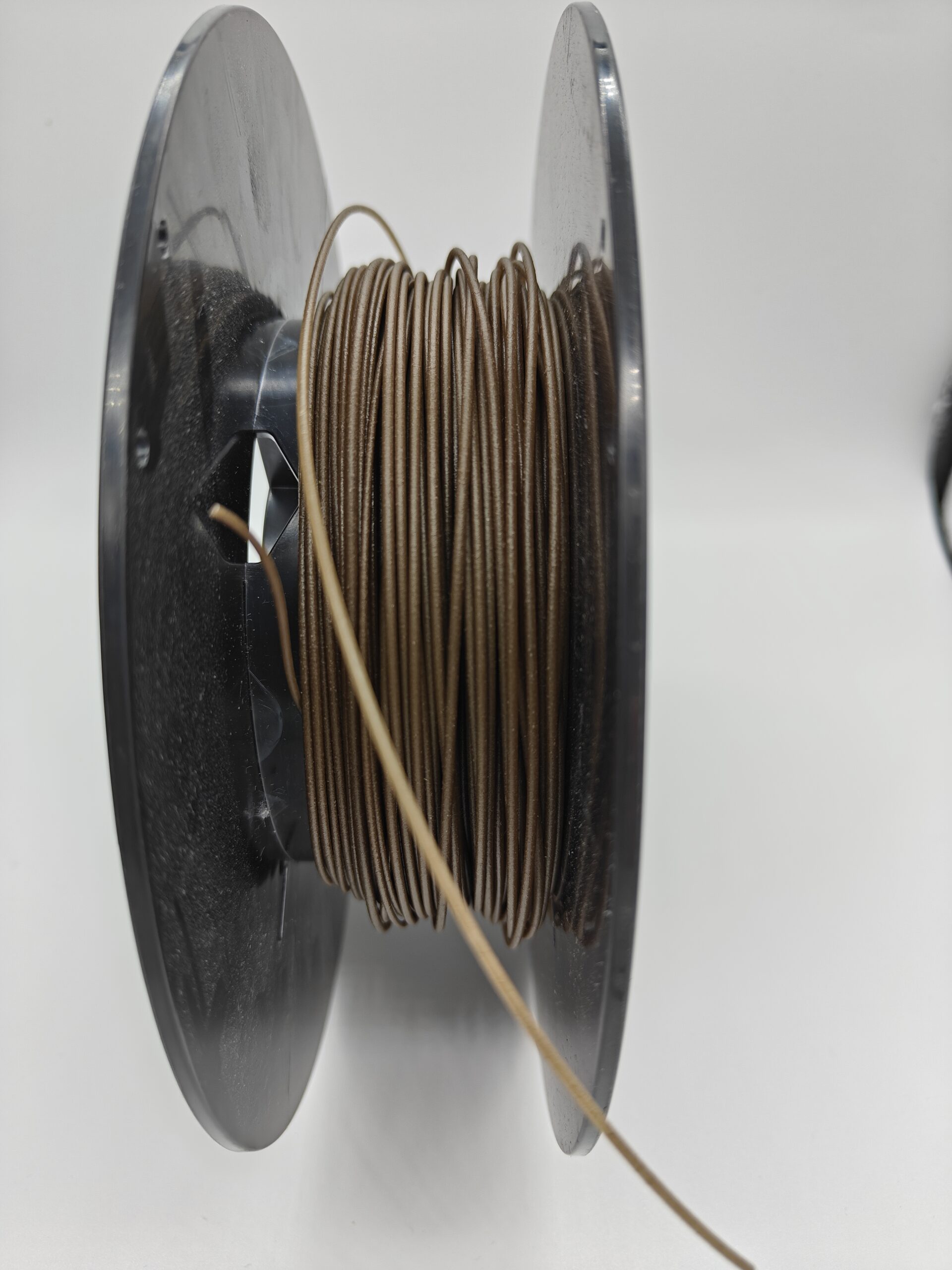
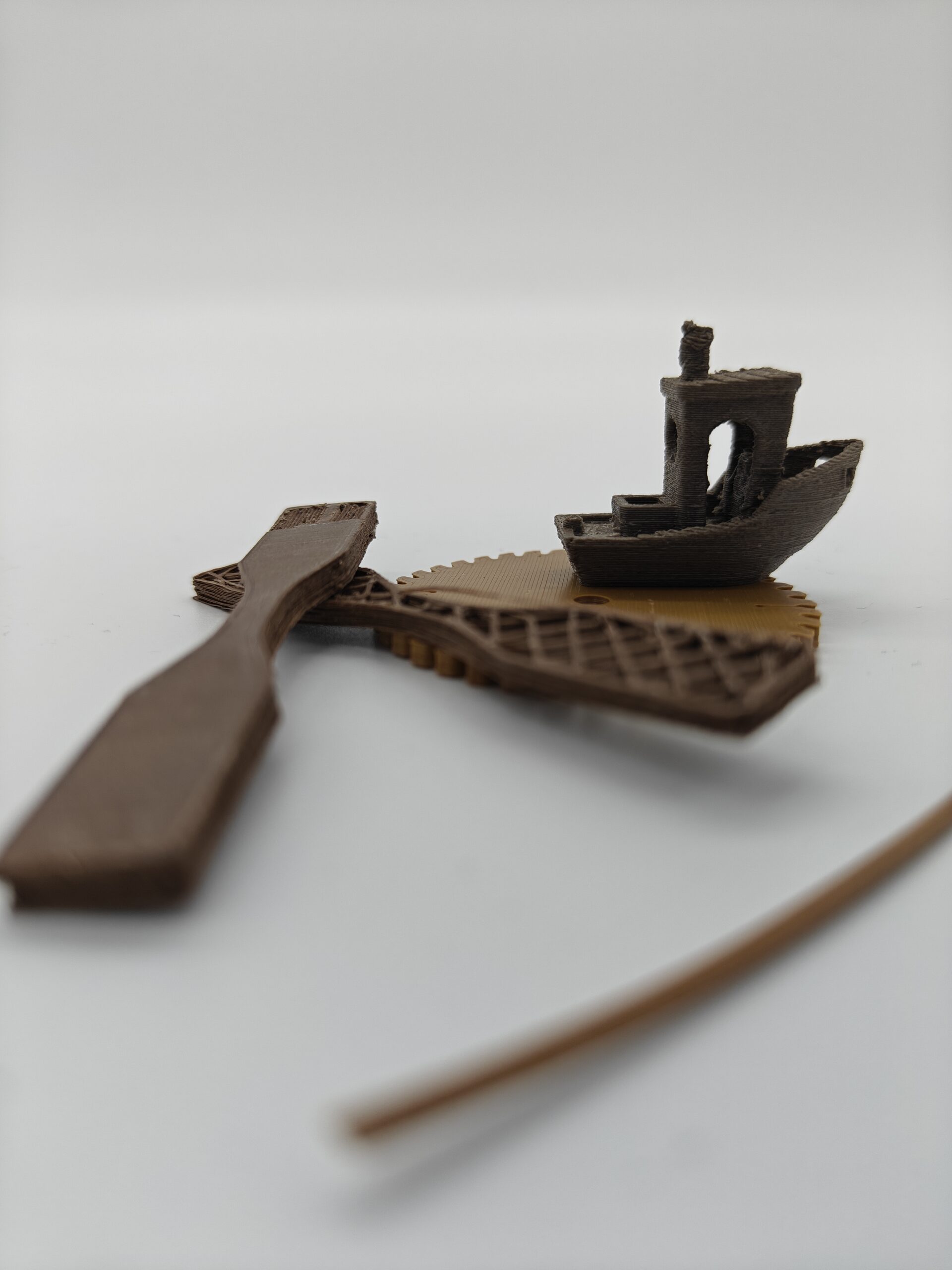
Our study in ACS Applied Polymer Materials shows how lignin produced using our fractionation technology can be incorporated at high levels into PLA and extruded into filaments for 3D printing.
Lignin is one of the main components of wood and an abundant renewable source of aromatic structures. However, conventional technical lignins can be challenging to incorporate into thermoplastics, as variations in purity and chemical structure often result in poor compatibility with the polymer matrix.
In this study, a phenolated organosolv lignin produced directly from pine sawdust was compared with two commercial kraft lignins. The lignin is modified in situ during the fractionation process, allowing its chemical properties to be tailored already during extraction in one-step. The different lignins were blended with poly(lactic acid) (PLA), a widely used bio-based thermoplastic, and converted into filaments for fused deposition modelling (FDM) 3D printing.
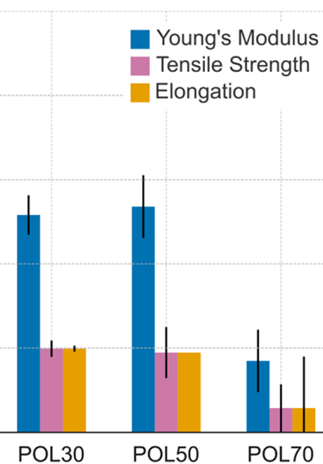
The tailored organosolv lignin showed better compatibility and printability with PLA than the kraft lignins tested. Blends containing 30 and 50 wt% lignin showed similar mechanical properties, while materials with up to 70 wt% lignin pushed the limits of processing and 3D printing.
An important part of the work was also to investigate what happens after the material has been used. PLA containing 30 wt% phenolated organosolv lignin could be ground, re-extruded into new filament and printed repeatedly, retaining its mechanical properties relatively well through three reprocessing cycles.
For AB Karl Hedin Bio Innovation, the study illustrates an important aspect of our technology: lignin does not need to be treated as a single generic by-product. By modifying lignin during biomass fractionation, its properties can instead be adapted for specific applications. Polymer composites and additive manufacturing are examples of how sawmill side streams can be converted into functional materials with significantly higher added value.
Interested in exploring tailored lignin for your materials? Contact us to discuss your application and opportunities for collaboration.
ACS Applied Polymer Materials, 2024, 6, 13574−13584