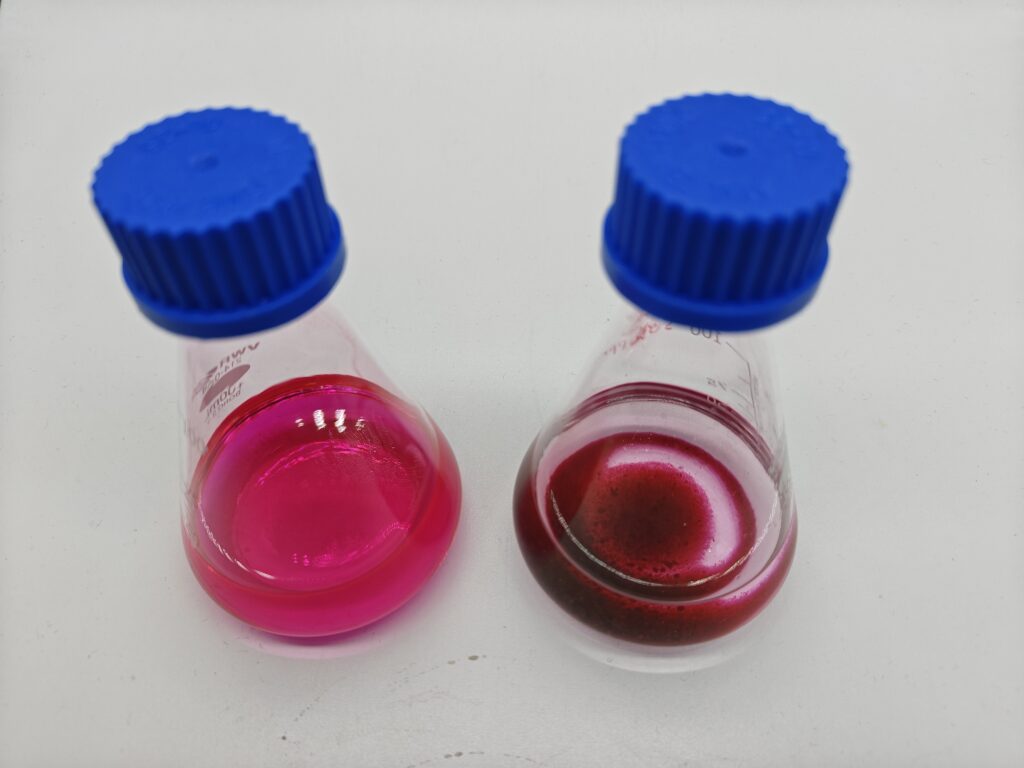
The publication, titled “Tailoring Biomass-Derived Organosolv Lignin Derivatives for High-Capacity Adsorption of Rhodamine B” and published in ChemSusChem, explores how structurally engineered lignin can be used as an efficient and renewable adsorbent material for water purification. The results demonstrate the potential of application-adapted lignin as a sustainable platform for high-performance adsorbent materials. Derived from forest-based biomass, lignin can be engineered for specific functions, opening new opportunities to replace fossil-based or synthetic materials in environmental applications.The study investigates organosolv lignin derivatives produced through a one-step biomass fractionation and functionalization process. By modifying lignin with different phenolic compounds, the researchers were able to tailor the material properties and evaluate how these changes affected the adsorption of Rhodamine B, a persistent cationic dye commonly used as a model pollutant in wastewater treatment research.Among the tested materials, resorcinol-modified lignin showed the highest adsorption performance, with a capacity of more than 100 mg per gram. This strong performance was linked to the material’s high surface area, pore volume and accessible functional groups, which together enhanced the interaction between the lignin-based adsorbent and the dye molecules.
“This publication is an important example of how lignin can be transformed from a side stream into a functional, high-value material. By tailoring the structure of lignin already during biomass fractionation, we can create materials with properties suited for demanding applications such as water purification,” says Johan Gising, CEO of AB Karl Hedin Bio Innovation.
ChemSusChem2026, 19, e202502472